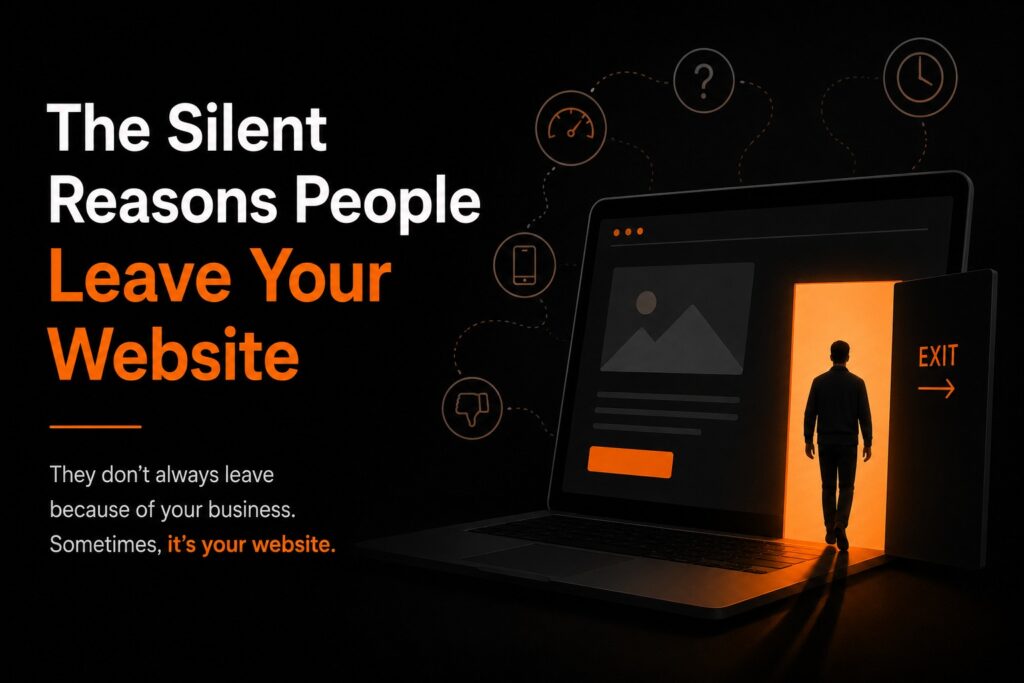
Your website may look professional, load with useful information, and still lose potential customers every day.
The problem isn’t always obvious. Sometimes visitors leave without complaining, clicking, or telling you why. Small issues in your website experience can quietly push people away.
Understanding these hidden reasons can help you improve your website, keep visitors engaged, and increase conversions.
1. Your Website Takes Too Long to Load
People expect websites to load quickly. If a page takes too long, visitors may leave before they even see your content.
Large images, unnecessary scripts, poor hosting, and unoptimized website elements can affect loading speed.
A faster website creates a better first impression.
2. Visitors Don’t Understand What You Offer
When someone lands on your homepage, they should quickly understand:
- What you offer
- Who you help
- What makes you different
- What they should do next
If your message is confusing, visitors may simply move to another website.
Keep your main message simple.
Instead of explaining everything immediately, clearly communicate your main value first.
3. Your Website Is Difficult to Navigate
Imagine a visitor looking for your services but struggling to find them.
If your navigation is confusing or important pages are buried under too many clicks, visitors can become frustrated.
A simple navigation menu with clear categories makes it easier for users to find what they need.
4. There Is No Clear Call to Action
Visitors need direction.
If your website doesn’t clearly tell them what to do next, they may leave even if they’re interested.
Use relevant calls to action such as:
- Get a Free Consultation
- Explore Our Services
- Contact Us
- Request a Quote
- Book a Call
The CTA should match the visitor’s stage in the buying journey.
5. Your Website Doesn’t Build Trust
Before contacting or buying from a business, people often look for signs that the business is reliable.
Your website can build trust through:
- Customer reviews
- Testimonials
- Case studies
- Portfolio
- Client results
- Certifications
- Clear contact information
Without trust signals, visitors may hesitate to take the next step.
6. Your Website Looks Poor on Mobile
A website that works well on desktop may not provide the same experience on a smartphone.
Small text, difficult buttons, poorly arranged images, and horizontal scrolling can quickly frustrate mobile users.
A responsive website should be easy to browse regardless of screen size.
7. Your Content Is Too Much or Too Little
Too much information can overwhelm visitors.
Too little information can leave them with unanswered questions.
The goal is to provide the right information at the right time.
Use headings, short paragraphs, bullet points, visuals, and clear sections to make important information easier to understand.
8. Your Website Doesn’t Match Visitor Expectations
Imagine someone clicks your search result expecting information about one service, but your landing page talks about something completely different.
That mismatch creates confusion.
Your search result, advertisement, social media post, and landing page should communicate a consistent message.
9. Your Website Feels Outdated
Design trends change, but a website doesn’t need to follow every trend.
However, an outdated design, broken links, old information, or poor-quality images can make visitors question whether the business is still active.
Regularly updating your website helps maintain credibility.
10. You’re Attracting the Wrong Visitors
Sometimes the website isn’t the main problem.
You may simply be attracting people who aren’t your target audience.
For example, getting thousands of visitors who have no interest in your services won’t necessarily produce customers.
Relevant traffic matters more than random traffic.
How to Keep Visitors on Your Website
A few simple improvements can make a significant difference:
- Improve page loading speed
- Make your message clear
- Simplify navigation
- Add strong calls to action
- Build trust with social proof
- Optimize for mobile
- Improve content readability
- Keep information updated
- Make the customer journey simple
- Attract the right audience
Final Thoughts
Visitors don’t always leave because your product or service is bad. Sometimes, small website problems silently make the decision for them.
A confusing message, slow page, weak CTA, poor mobile experience, or lack of trust can turn an interested visitor into a lost opportunity.
Your website should do more than simply exist online. It should make visitors feel comfortable, answer their questions, build trust, and guide them toward the next step.
Don’t just ask how many people visit your website. Ask why they stay—and why they leave.